Benny’s Royal Tour’s Cherry Blossom Festival in Japan and Korea Tour begins. Immerse yourself in an incredible journey covering two fascinating countries, Japan and South Korea during spring. Sakura, the cherry blossom season, is the best season to visit these countries, full of cherry blossom flowers. Assemble @ Kochi International airport @ 21.00 hrs. Malaysian Airlines Flight MH 109 departs at 00.20 hrs. And arrives at Malaysia International airport at 07.10 hrs.
Day 2
Malaysia - Tokyo
Welcome to Japan, the Land of the Rising Sun
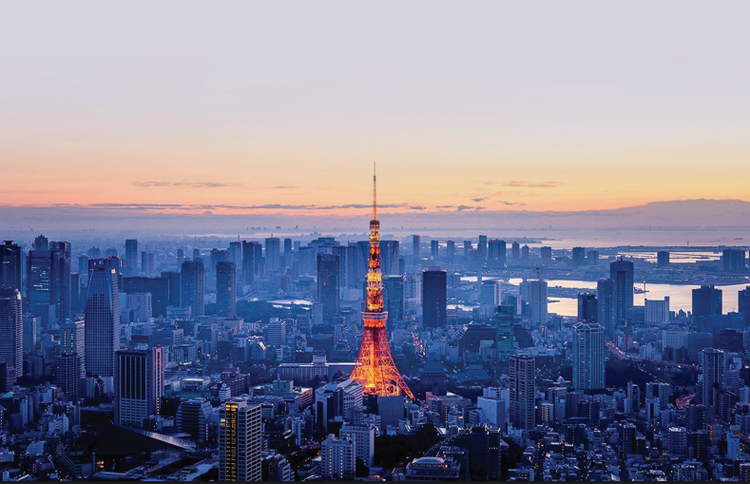
Later connects with Malaysian Airlines and arrives at Narita International Airport, Tokyo at 18.05 hrs. Japan is an island country in East Asia. It is situated in the northwest Pacific Ocean and is bordered on the west by the Sea of Japan, the East China Sea, the Philippine Sea, and Taiwan in the south. Marco Polo, the Italian trader, and explorer introduced this beautiful country to the Western world during the 13th century. It is formed from about 6,852 islands. The country has the highest literacy rate in the world and the people of Japan are best known for maintaining a better and healthier lifestyle. Japan has mostly covered by forest area and there are more than 100 active volcanoes. Tokyo is the capital of this beautiful country and the busiest capital, which mixes the ultramodern and the traditional, from neon-lit skyscrapers to historic temples. On arrival, after Dinner you will proceed to the hotel, overnight at Hotel.
Overnight stay : Sheraton Grande Tokyo Bay Hotel or similar in Tokyo.
Meals : Breakfast and lunch on board, Dinner at the Restaurant.
Day 3
Tokyo City Tour
Tokyo, Japan’s busy capital, mixes the ultramodern and the traditional, from neon-lit skyscrapers to historic temples. After a buffet breakfast at the hotel we visit shinjuku Gyoen Park, digital art museum, Tokyo Sky Tree, Photo stop at Scramble Crossing. Shinjuku Gyo-en or Shinjuku Gyoen National Garden is a large public garden in Shinjuku and Shibuya, Tokyo, Japan. It was originally a residence of the Naitō family in the Edo period. It is a large park-like area located in the Chiyoda district of the Chiyoda ward of Tokyo and contains several buildings including the Fukiage Palace where the Emperor has his living quarters, the main palace where various ceremonies and receptions take place, some residences of the Imperial Family, an archive, museums and administrative offices. With cherry blossoms and other seasonal flowers blooming in the park, people can be seen sitting on benches and forest-bathing during the day.
Sensō-ji Temple: Historic temple to the goddess of Mercy
Tokyo, Japan’s busy capital, mixes the ultramodern and the traditional, from neon-lit skyscrapers to historic temples. After buffet breakfast at the hotel and soak in the sights of this magnificent Tokyo city on a guided city tour. The sightseeing will start from Sensoji, the historic temple to the goddess of mercy, a very popular Buddhist temple, built in the 7th century. It features Tokyo’s biggest souvenir market, as well as perhaps the gaudiest rendezvous point—it’s Kaminarimon Gate with the huge red chochin lantern. Adjacent to the temple is a five-story pagoda, a Shinto shrine, the Asakusa Shrine, and here we can see many women in Kimono.
Tokyo Skytree: Landmark of Tokyo
The Landmark of Tokyo. After lunch visit Tokyo Sky tree and Sumida River cruise. The landmark of Tokyo is a huge television broadcasting tower and World’s tallest freestanding broadcasting tower with an observation deck boasting 360-degree views. It is the centerpiece of the Tokyo Sky Tree Town in the Sumida City Ward with a height of 634 meters. It is the tallest structure in Japan and the second tallest in the world at the time of its completion. You will get a chance to get a birds-eye view of Tokyo city from the Tokyo Sky tree.
Shibuya Crossing and Hachiko statue
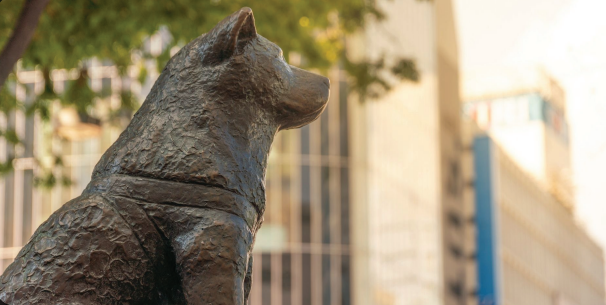
Shibuya Crossing is famous for being a visually dramatic “scramble” with thousands of people crossing simultaneously in all directions when the traffic lights turn red, making it a symbol of Tokyo’s modern, fast-paced urban life. Its iconic status is enhanced by its fame as the world’s busiest pedestrian intersection, its vibrant setting with large digital billboards and neon lights, and its frequent appearance in popular culture, including films, TV, and photography. A statue of the loyal dog named Hachiko stands eternally vigilant before Shibuya Crossing, an intersection which has become one of Tokyo’s most iconic sights. When the lights turn red, the zig-zagging crosswalks are buried under an avalanche of footfalls as thousands of people try to cross simultaneously. It’s hypnotic, especially when witnessed from above. The Hachiko statue is a well-known bronze monument located.
Visit the World’s First Digital Art Museum in Tokyo.
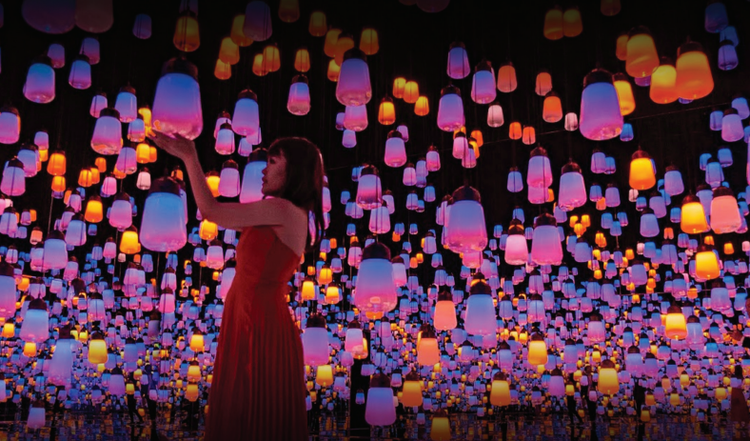
Visit World’s First Digital Art Museum in Tokyo. MORI Building DIGITAL ART MUSEUM: team lab Borderless, in Tokyo’s Odaiba district, combines science, art, technology, design, and images of the natural world with simulations generated by 520 computers and 470 high-tech projectors. With over 107,000 square feet of space, the museum has 50 interactive displays that blend into one another over five diff erent zones. The exhibit’s “borderless” name encourages breaking down barriers – barriers between one piece of art and another, art and its visitors, and one person and another. There’s no set course for enjoying this digital art museum, so just let your curiosity and imagination wander, and pick any path to start. There are five connected zones in the museum. “Borderless World,” the first zone, is an interactive digital landscape where visitors are encouraged to create their own path. People walk through digitized waterfalls, “touch” luminescent birds and saunter through computer-generated forests and fields. After dinner, transfer to the hotel. Overnight stay at a hotel in Tokyo.
Overnight stay: Sheraton Grande Tokyo Bay Hotel or similar in Tokyo.
Meals : Breakfast / lunch and Dinner at the Restaurant / Hotel.
Day 4
Mt. Fuji Tour
Enjoy the scenic view of Mt. Fuji from 5th station
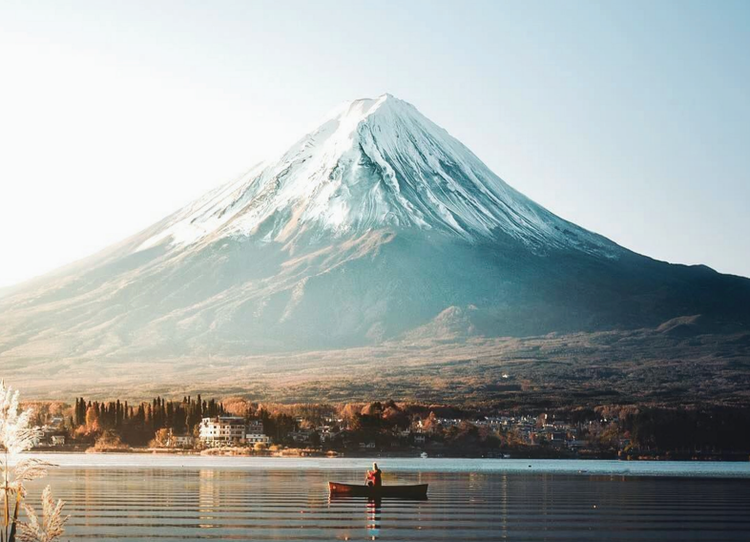
After breakfast we take you to Mt.Fuji 5nd station in for scenic view of Mt. Fuji. The Fujinomiya 5th Station is the second most popular stations on Mount Fuji. At 2400 meters above sea level, the Fujinomiya 5th Station is the highest Motorable road of Mount Fuji. Enjoy the ease of comfortable transportation and a knowledgeable guide, who will accompany you to the revered Mt Fuji’s 5th Station. From here you will get a panoramic view of the mountain. Mt. Fuji attracts hikers and climbers from the world over, and most of them start their ascents at the 5th station, halfway up the mountain. Mount Fuji is one of the most famous landmarks of Japan, and seeing it during the fall season makes it seem that much more majestic.
Hakone Lake Ashi | Tranquilizing Boat Cruise
Cruise on Lake Ashi provides a beautiful view of Lake Ashi, a lake formed in the caldera of Mount Hakone after the volcano’s last eruption 3,000 years ago. Today, Lake Ashi is often pictured with Mount Fuji in the background as a symbol of Hakone. The best views of the lake in combination with Mt. Fuji can be enjoyed from Moto-Hakone, Hakone Detached Palace Garden, and from sightseeing boats cruising the lake. Note however, that clouds and poor visibility often block the view of Mt. Fuji, and you must consider yourself very lucky if you get a clear view of the mountain.
Hakone Ropeway
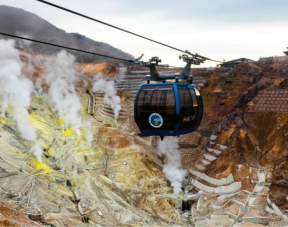
Hakone Ropeway offers breath-taking views of ‘Owakudani’, Hakone’s most famous tourist spot. Desolate mountainside covered by plumes of smoke produce a distinct scene fitting the area’s former name of Hell Valley. Now, the Hakone Ropeway rising above Owakudani. There are also many scenic spots to be seen from the ropeway. Registered by the World Cultural Heritage, Japan’s tallest mountain Mt. Fuji is a foremost tourist site in Japan. On a clear, fine day, the grand, beautiful mountain can be seen from Owakudani and the ropeway
Owakudani Valley-Active Volcanic Zone
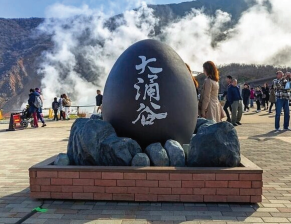
Owakudanl is the area around a crater created during the last eruption of Mount Hakone some 3000 years ago. Today, much of the area is an active volcanic zone where sulfurous fumes. Eggs cooked in Owakudani's hot spring pools with their shells blackened by the sulfur are on sale at shops in the area, and eating one is said to prolong one's life by seven years. After dinner transfer to the hotel Ovemight stay at hotel in Tokyo.
Overnight stay: Sheraton Grande Tokyo Bay Hotel or similar in Tokyo.
Meals: Breakfast/lunch and Dinner at the Restaurant Hotel.
Day 5
Tokyo - Hiroshima
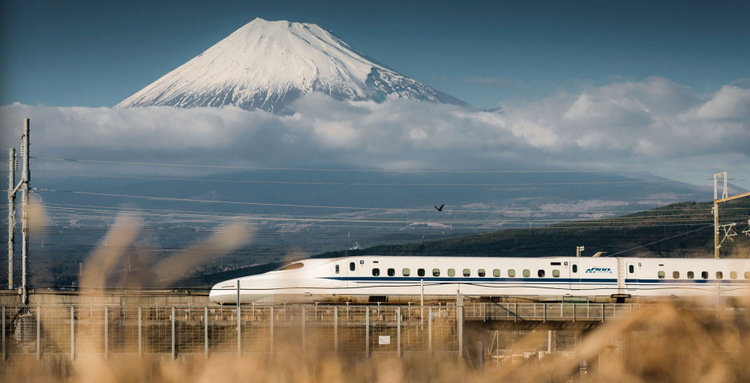
Tokyo to Hiroshima bullet train
After breakfast we will proceed to Tokyo station to catch the bullet train to Hiroshima. Upon arrival transfer to Hiroshima. Hiroshima is a modern city on Japan's Honshu Island, was largely destroyed by an atomic bomb during World War II. After Lunch will visit the historical highlights of Hiroshima on a comprehensive full-day tour, led by a knowledgeable guide.
Explore Miyajima, widely regarded as one of the most scenic destinations in Japan
After lunch we transfer to Miyajima Guchi Pier to take a ferry to Miyajima Island. On arrival in Miyajima Island visit Itsukushima Shrine and the floating red Torii. Miyajima Island, one of the most scenic spots in Japan, has long been regarded as an Island of Gods on the beautiful Seto Inland Sea. It is a romantic and historical island where Itsukushima Shrine, a World Heritage site, is located, along with the Virgin Forest of Mt. Misen, and numerous preserved shrines, temples and historical monuments. This place is famous for red Torii (red shrine gateway standing in the sea), one of the features that make this one of the three most scenic spots in Japan in any season. It is most famous, which at high tide seems to float on the water. The sight is ranked as one of Japan's three best views. People strongly believe that it's "home of God" Besides the iconic "floating" torii, Miyajima, as the island is more popularly known, has numerous attractions to see. Explore UNESCO World Heritage Itsukushima shrine and admire the five-story pagoda. Later we will return back to the mainland by ferry.
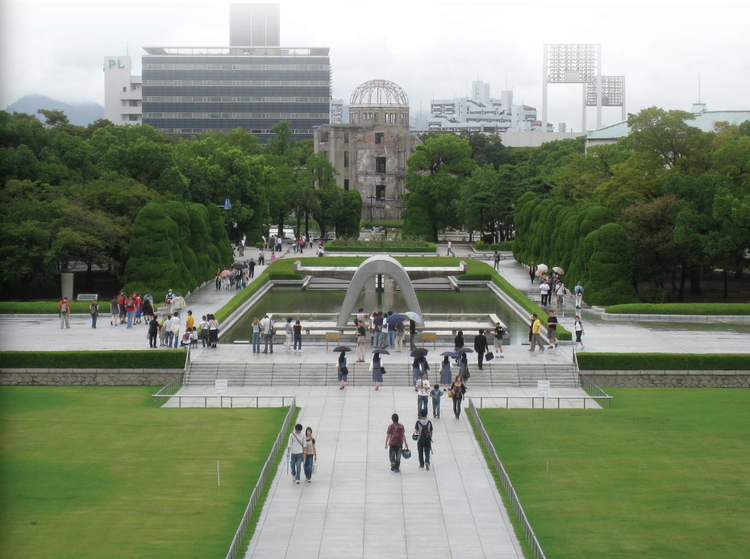
Here we visit Hiroshima Peace Park and Atomic Bomb Dome and feel emotionally stirred by the magnificent Hiroshima Peace Memorial Park and Museum, in which intriguing exhibitions speak eloquently of the atomic bomb dropped on the city in 1945. This building, which was once an exhibition hall, is the only structure near the explosion’s center that survived in any capacity. The surviving skeleton has been maintained as it was left by the bombing, and was designated a UNESCO World Heritage Site in 1996. This close to ground zero, it is miraculous that anything survived a blast that was equivalent to dropping 15,000 tons of TNT. The blast disintegrated everything within a one mile radius of its center, and caused destruction in a five mile area – essentially 2/3 of the city. The ruin of the hall serves as a memorial to the people who were killed in the atomic bombing of Hiroshima on 6 August 1945. Over 70,000 people were killed instantly, and another 70,000 suffered fatal injuries from the radiation and we will see Genbaku Dome, one of the few buildings that was left standing near ground zero. Here we also visit Hiroshima.
Memorial Peace Park. Before the war, this area was described as the lively shopping and entertainment center of Hiroshima. The park has many memorials, monuments and sculptures, but the centerpiece is the monument that covers a cenotaph inscribed with the names of all those that died from the nuclear bombing. Behind the cenotaph memorial is the Peace Flame which has burned continuously since 1964 and will not be extinguished until all threat of nuclear bombing has been eliminated.
Visit Children's Peace Monument & Paper Crane
Later we visit the Children's Peace Monument. It was built with the contributions from 3200 Japanese schools and nine countries. At its base is a plaque that reads: "This is our cry, this is our prayer: for building peace in this world". The monument is dedicated to all the children that died as a result of the bombing. The story behind the design of the Children's Peace Monument is even more touching. The sculpture is that of a girl holding a crane and is based on the real life story of Sadako Sasaki. Sadako was two years old when the atomic bomb was dropped over Hiroshima and lived a little over one mile from ground zero. She and her parents survived the blast, but at the age of 12, she developed leukemia as a result of the radiation from the atomic bomb. In the hospital Sadako learned of the Japanese legend that promised that a wish would be granted to anyone that folded 1000 paper origami cranes. Her wish was for a world without nuclear weapons. One version of the story says that she only managed to make 644 paper cranes before she died on Oct. 12, 1955. The story goes on to say that her classmates went on to make 1000 paper cranes which were buried with her. Today, many come to this monument to donate paper cranes as a continuing symbol for the desire for peace. After Dinner, transfer to the hotel. Overnight stay at a hotel in Hiroshima.
Overnight stay: Grand Prince Hotel Hiroshima or similar in Hiroshima.
Meals: Breakfast/lunch and Dinner at the Restaurant/Hotel.
Day 6
Hiroshima - Osaka
Visit Osaka Castle and Park
After Breakfast proceed to Hiroshima station to Shin Osaka station. Osaka is one of Japan's best cities for cherry blossom viewing (hanami). Osaka is known as the 'Manchester of Japan' as it is an important textile centre in Japan and traditionally considered Japan's economic hub.
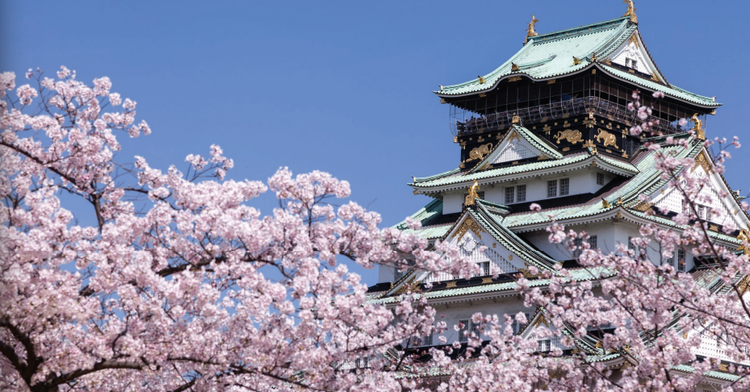
Upon arrival at Osaka, after lunch we will go to Osaka Castle Park (Photo Stop-outside only). The popular tourist destination for both domestic and international travelers. Osaka Castle Park is just one of the many places in Japan that offers a venue perfect for viewing picnics during the spring season. Osaka Castle, completed in 1586, was built by famed Japanese warrior and politician Toyotomi Hideyoshi and was, at the time, the largest castle in Japan. Highlights include the five-story, 42-meter-tall main tower containing a great museum with exhibits related to the history of the castle and the city and it also offers superb views over Osaka from its upper floors. Here we visit a municipal park which stands near the Osaka Castle. A beautiful cherry blossom passage that has been a spring tradition in this park for over 100 years, since the Meiji period.
On the way we will passing by The Gate Tower Building in Osaka, Japan, is famous for the Hanshin Expressway passing through its 5th, 6th, and 7th floors, an engineering feat accomplished after the city and landowner reached an agreement in 1989 to allow the highway construction. The highway is supported by pillars and does not directly touch the building, creating a unique tunnel-like structure for vehicles. You can see the building from the street, but the high walls lining the highway limit the view of passing cars.
Later will get a chance to visit Dotonbori, Time Square in Japan. The lively entertainment area of Dotonbori is Osaka's most famous tourist destination and is renowned for its gaudy neon lights, extravagant signage, and enormous variety of restaurants and bars. The name "Dotonbori" generally refers both to the Dotonbori Canal and to Dotonbori Street which runs parallel to the canal's southern bank. It is one of the most colorful areas in Osaka and an absolute must-visit location when we visit Osaka city. After dinner we will transfer to the hotel. Overnight stay at hotel in Osaka.
Overnight stay: Liber Hotel Osaka or similar in Tokyo.
Meals : Breakfast / lunch and Dinner at the Restaurant / Hotel.
Day 7
Osaka - Kyoto - Osaka
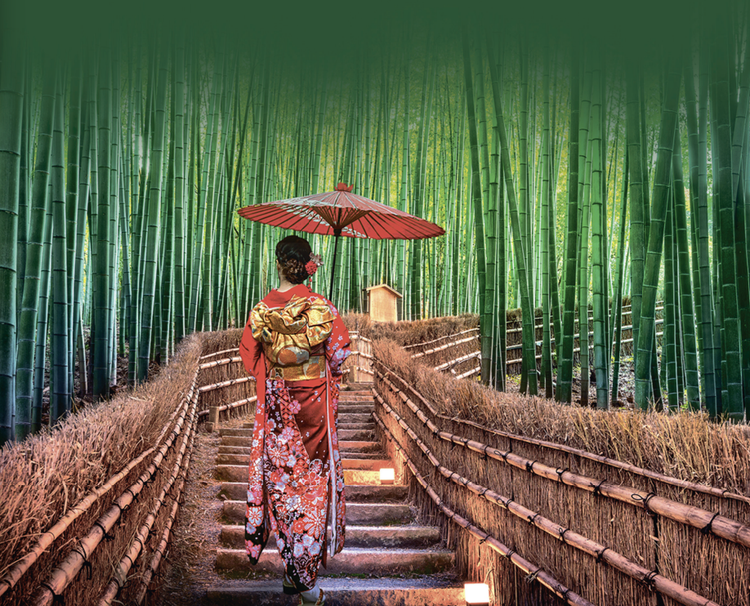
After continental breakfast proceed to Nara, another historical city in Japan. On the way we visit Arashiyama, a pleasant, touristy district in the western outskirts of Kyoto. The area has been a popular destination since the Heian Period (794-1185), when nobles would enjoy its natural setting. Arashiyama is particularly popular during fall color season. Here we visit the Arashiyama Bamboo forest. Located about 7km west of downtown Kyoto, Arashiyama is one of Kyoto’s most popular sightseeing districts. The heart of the district is the Arashiyama Bamboo Grove, a mesmerizing grove of thousands of tall bamboo plants. A paved walkway runs through the middle of both sections, forming the famous “Bamboo Alley,” one of Kyoto’s most photographed sights. The combined length is about 500 meters, and the grove is about 140 meters wide. Many people wonder about the meaning or purpose of the bamboo grove. As a matter of fact, it’s merely decorative. Arashiyama has been a favorite location of imperial and noble villas and temples from the days of classical Japan. Later Drive to Nara.
After lunch Visit Tōdai-ji and Nara park. Tōdai-ji is a Buddhist temple complex that was once one of the powerful Seven Great Temples, located in the city of Nara, The best-known relic at Todaiji Temple is its Daibutsu, a colossal statue that, with 15 meters (49 feet) in height, is the World’s largest gilded bronze Buddha. It is housed in an all-wood building, the Daibutsu-den, 48 meters (157 feet) in height, the largest wooden building in the world.
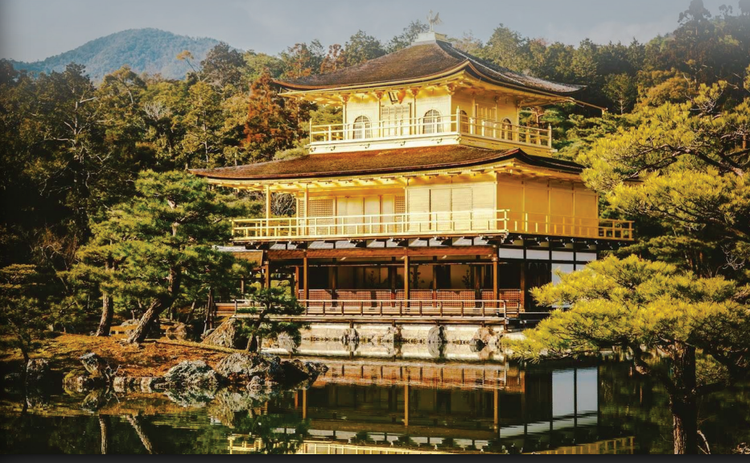
The Golden Pavilion, or Kinkaku-ji
The Kinkakuji is a Zen Buddhist temple in northern Kyoto whose top two floors are completely covered in gold leaf. Formally known as Rokuonji, the temple was the retirement villa of the shogun Ashikaga Yoshimitsu, and according to his will it become a Zen temple of the Rinzai sect after his death in 1408.Most notably are the temple’s top two floors, which are completely covered in gold. On top, a beautiful phoenix looks out over the water. Later after Dinner transfer to Hotel.
Overnight stay: Liber Hotel Osaka or similar in Tokyo.
Meals : Breakfast / lunch and Dinner at the Restaurant / Hotel.
Day 8
Japan - South Korea
After breakfast, check out and transfer to Osaka, Kansai International Airport. Take Flight to South Korea. Welcome to South Korea. South Korea officially the Republic of Korea is a country in East Asia constituting the southern part of the Korean Peninsula and sharing land border with North Korea. We are entering into Seoul in South Korea with its eastern border through the Sea of Japan. Upon arrival after emigration and customs formalities we will be greeted by our team in South Korea. After lunch transfer to the hotel. After Check-in, proceed to a Han River cruise in Seoul that offers stunning city views from the water, with various options like daytime sightseeing, romantic sunset cruises, and night cruises featuring live music and fireworks. Operated by E-Land Cruise, these tours depart from Yeouido or Jamsil and highlight landmarks such as the 63 Building and the Banpo Bridge Rainbow Fountain, providing a unique perspective of Seoul. Later proceed to Shopping at Myeongdong Market. Myeongdong Market is one of South Korea’s prime shopping districts. Myeongdong is a haven for fashion lovers. You’ll find trendy Korean styles for both men and women, as well as the latest collections from global brands. For beauty enthusiasts, this is paradise. Shops like Olive Young, Lush, The Face Shop, Innisfree, and many local beauty stores are located throughout the area. You’ll find department stores, shopping malls, and independent shops, together with a host of trendy restaurants and cafes. Popular shopping malls in Myeongdong Market include Lotte Department Store, Lotte Young Plaza, and Noon Square Shopping Mall. After dinner transfer to Hotel. Overnight stay in Seoul.
Overnight stay: - Swiss Grand Hotel Seoul or similar in Seoul.
Meals : Breakfast / lunch and Dinner at the Restaurant / Hotel.
Day 9
Nami Island - North Korean Border Tour
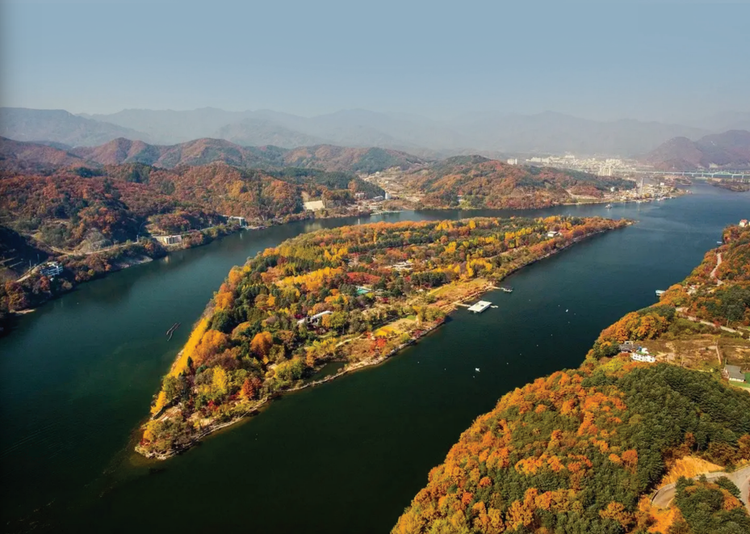
After continental breakfast we will transfer to Nami Island in Ferry boat. Nami Island, well-known for K-Drama shooting place because of beautiful natural scene. In spring season visitors can enjoy the spectacular beauty of spring flowers in Nami Island. Your vacation in South Korea is not complete without visiting the beautiful Nami Island. Walk between beautiful trees and take a breath of fresh air while spending time in this pristine landscape. Many people look forward to visit Nami Island during the spring and take shots of this rare scenery that can only be seen on Nami Island. You are free to explore the beautiful island on your own. Return ferry to mainland. After lunch visit to Gapyeong cultural village. The "Gapyeong cultural village" most accurately refers to Petite France, a European-style village in Gapyeong, South Korea, known for its French architecture and theme of "flowers, stars, and the Little Prince," inspired by the famous book. Another cultural site in the Gapyeong region is Edelweiss Park, a Swiss-themed village that also offers beautiful architecture and is a popular spot for K-drama fans. It has been a shooting location for popular Korean variety shows and dramas, including "We Got Married Global" and "Remember: War of the Son".
Korean Folk Village
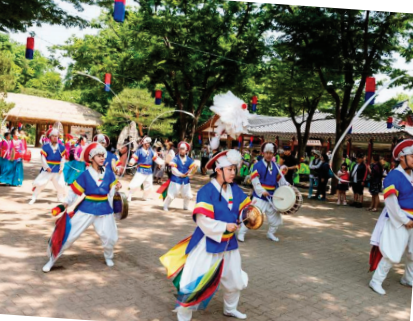
After lunch, proceed to Korean Folk village to explore the culture and diet of Koreans. The Village is located on a large 245 acres of land with a backdrop of mountains and a river running through it. The village was created by relocating and restoring 270 real houses from different parts of the country, successfully enacting the daily life culture of a typical village during Joseon dynasty. The Korean Folk Village has been a popular film site for many well- known historical dramas including My Love from the Star (2013), Moon Embracing the Sun (2012), Dong Yi (2010), Sungkyunkwan Scandal (2010), The Great Queen Seondeok (2009) and of course, the hugely popular Dae Jang Geum (2003). After Dinner we will transfer to hotel.
Overnight stay in Seoul.
Day 10
Gyeongbok Palace - Korean Demilitarised Zone (DMZ)
Visit Gyeongbok Palace and witness changing of guard’s ceremony
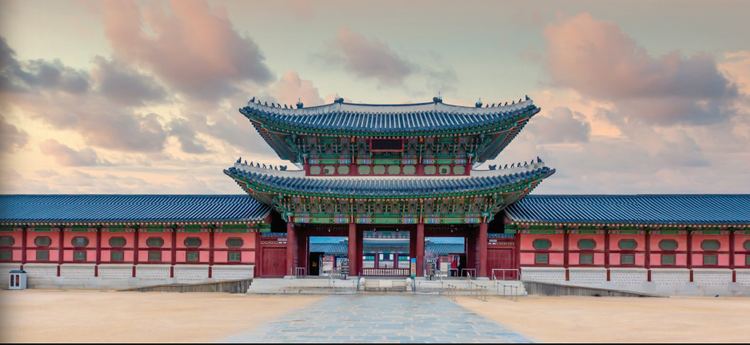
Seoul, the capital of South Korea, is a huge metropolis where modern skyscrapers, high-tech subways and pop culture. After continental breakfast we visit the popular tourist destinations such as royal palaces, traditional markets. Later visit Gyeongbokgung Palace, the seat of royal power for hundreds of years. Gyeongbokgung Palace, the largest and most striking of the 5 grand palaces built during the Joseon dynasty. Built in 1395 by King Taejo, this iconic landmark lets you experience life in Joseon-era Korea in a guided tour. There are over 300 buildings within the complex, including The National Folk Museum and The National Palace Museum. You can explore the palace grounds and marvel at remnants of the Joseon Dynasty, including the Gyeonghoe-ru Pavilion, Hyangwonjeong Pond, and sculptures of The Royal Audience Chamber. Here you will get an opportunity to witness the changing of guards’ ceremony in front of Gyeongbokgung Palace. During the Joseon Dynasty, the royal guards were responsible for guarding and patrolling the gates of the capital city and the royal palaces. They were in charge of opening and closing the palace gates, inspecting all visitors, and maintaining close surveillance of the palace. Free time to explore Insadong Street for antique and handcraft souvenirs. Later visit Joggesa Temple. Jogyesa is the chief temple of the Jogye Order of Korean Buddhism. The building dates back to the late 14th century and became the order’s chief temple in 1936. It thus plays a leading role in the current state of Seon Buddhism in South Korea.
Visit Gyeongbok Palace, the official residence of Korean monarchs
Later visit Gyeongbokgung Palace, the seat of royal power for hundreds of years. Gyeongbokgung Palace, the largest and most striking of the 5 grand palaces built during the Joseon dynasty. Built in 1395 by King Taejo, this iconic landmark lets you experience life in Joseon-era Korea in a guided tour. There are over 300 buildings within the complex, including The National Folk Museum and The National Palace Museum. You can explore the palace grounds and marvel at remnants of the Joseon Dynasty, including the Gyeonghoe-ru Pavilion, Hyangwonjeong Pond, and sculptures of The Royal Audience Chamber. After dinner we will transfer to hotel. Overnight stay in Seoul.
Visit the Korean Demilitarised Zone (DMZ), the scariest place on earth
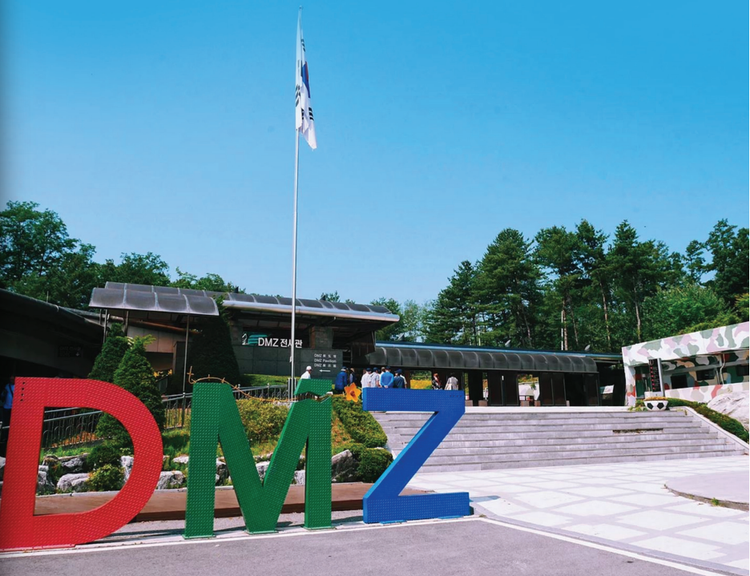
We will transfer to The Korean Demilitarised Zone (DMZ) 'the scariest place on earth'as by the former U.S president Bill Clinton said. This is a piece of land running across the Korean peninsula between South and North Korea. The area is the existing proof of what has caused a lot of pain to millions of Koreans. It was established to serve as a buffer zone between the countries of North Korea and South Korea under the provisions of the Korean Armistice Agreement in 1953, an agreement between North Korea, China, and the United Nations Command. The DMZ is 250 kilometres (160 mi) long and about 4 kilometres (2.5 mi) wide.
Here we visit 'The Third Tunnel' which was made by North Korean soldier to attack South Korea, visit 'Dora Observatory' to see North Korean territory, 'Dora Train Station', DMZ Theater, 'Unification village', Imjingak Resort, the three-storied Imjingak is surrounded by several monuments. In front of Imjingak is the Gyeongui Train Line which was destroyed during the Korean War in 1950. Paju DMZ is at a crossroad where the clear water of Imjingang River connects between South and North Korea. Flowing from Hangyeongnam-do and into Hangang River, Imjingnag River shows off its beauty as it serenely passes through the cease-fire line. However, it is remembered as a site of the painful and tragic national division of the Korean Peninsula. Freedom Bridge is located at the back of Bangbaedan Altar in front of Imjingak Square in Majeong-ri, Munsan-eup. It was named Freedom Bridge because 12,733 Korean War prisoners returned home for freedom through this bridge in 1953.The Peace Bell was built in 2000 to pray for peace of the human race and national unification in celebration of the new millennium. After Dinner transfer to Hotel.
Overnight stay: - Swiss Grand Hotel Seoul or similar in Seoul
Meals : Breakfast / lunch and Dinner at the Restaurant / Hotel.
Day 11
Fly Back Home
After continental breakfast check out hotel and transfer to Incheon International airport on your way back home. Malaysian Airline Flight MH 67 depart at 11.00 hrs. And arrive Kuala Lumpur International airport at 16.35 hrs. Later connects Malaysian Airline Flight MH 108 at 22.00 hrs. And arrive Kochi International airport at 23.20 hrs. With sweet memories of Benny’s Royal Tour’s Japan and Korea Tour.